From idea to scaling into new markets: new government measures to support startup development
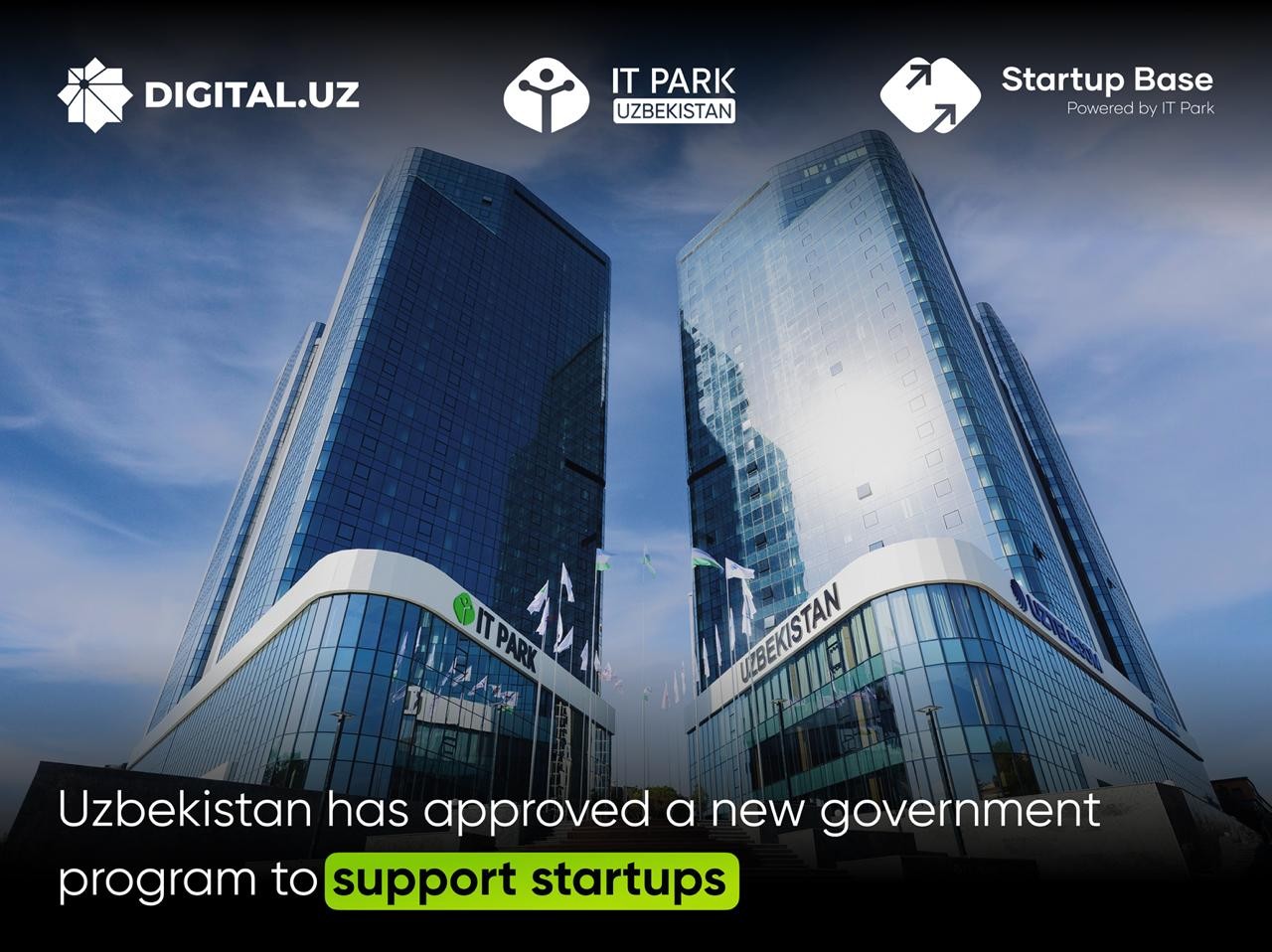
On February 11, the President of the Republic of Uzbekistan signed Resolution No. PP–59 “On measures to implement a comprehensive startup support ecosystem.” The document establishes a structured framework for startup development — from idea to international expansion — making this trajectory clearer and more predictable.
By 2030, the country aims to reach a new scale of technological entrepreneurship. Uzbekistan plans to have around 5,000 active startups and attract at least $2 billion in venture capital investment — capital that enables companies to grow and expand beyond the local market.
A separate benchmark focuses on building strong technology companies: 500 startups valued at over $1 million, 100 valued above $10 million, and at least 25 exceeding $100 million. In parallel, more than 20,000 jobs are expected to be created, and at least 400 projects are planned to enter international markets.
The program consists of four stages, each corresponding to a specific phase of startup development and equipped with targeted support instruments.
Stage One — Idea Formation
Everything begins with a person who has a product idea but lacks clarity on how to validate it or where to take it. Therefore, the program starts not with funds or investments, but with the creation of an enabling environment.
Starting from the 2026–2027 academic year, schools, colleges, and technical institutes will introduce a regular “Skills and Business Hour” format at least twice a month. These sessions will teach business thinking, the stages of forming a viable startup idea, and how to turn it into a project.
The next step is the “Best Startup Idea” competition. Winners at the district level receive up to 5 million UZS; regional winners receive up to 10 million UZS. Projects are mentored by the Youth Affairs Agency and IT Park Uzbekistan, ensuring that ideas receive both guidance and initial funding.
In parallel, a national competition titled “Most Innovative Idea” will be launched in public universities. Winners receive grants of 100 million UZS. The national stage will be held across 10 fields, with a total prize fund of 10 billion UZS financed by the Fund for Financing Science and Supporting Innovations.
This framework also includes a crowdsourcing mechanism on the Startup Base platform. Government agencies will publish real-world challenges and conduct open competitions, while procurement of effective solutions will also take place through the platform. From the outset, startups can work directly on specific market demands.
If a project proves itself at ideathons or hackathons, state-backed venture funds may provide convertible loans of up to the equivalent of $20,000, provided the team participates in incubation or acceleration programs. Additionally, under the “Digital Startups” program, grants of up to $10,000 are available for digital projects. At this stage, the idea gains not only recognition but also tools to move toward development.
Stage Two — Product Development
Once the idea is formulated and the team is ready to work, the next question arises: where to build the product?
Starting in 2027, R&D centers will be established, equipped with laboratories, 3D printers, digital infrastructure, coworking spaces, legal support, and testing facilities. These centers will provide space for development and testing.
An R&D voucher mechanism will be introduced: the state will cover up to 50% of expenses for MVP development and testing, up to $50,000 per project. Support will be granted annually to a limited number of promising startups, ensuring a focus on quality.
From September 1, 2026, the “Universities as Startup Generators” program will launch. Universities will establish incubators and student accelerators, introduce internship and international exchange programs, and will be authorized to invest up to $20,000 in student and research-based startups.
Additionally, starting in 2026, the “Young Entrepreneurs” championship will be held. As a result, up to 100 projects may attract investments of up to 1 billion UZS each. Marketing and promotion expenses will be covered, and winners may be recommended for state awards, including “Faol tadbirkor” and “Uzbekiston belgisi.” This stage marks the transition from prototype to a market-ready product.
Stage Three — Launch and First Sales
When a startup has a ready product or MVP, a new phase begins. During development, the focus was on building and testing technology. With market entry, operational challenges emerge: company registration, tax model selection, accounting, contracts, hiring employees, and working with first customers.
Many projects stall at this stage. To mitigate such risks, the government is introducing additional mechanisms to support startup teams in product development and commercialization.
From April 1, 2026, participants in the “Digital Startups” program will automatically receive resident status at IT Park Uzbekistan without minimum export requirements. This provides access to a simplified tax regime and existing benefits without first proving export revenue.
Through the unified electronic platform startupbase.uz, up to 50% of costs for participation in international accelerators, training, and certification will be reimbursed — up to $20,000. Expenses related to patenting and intellectual property registration will also be compensated, which is crucial when entering competitive markets.
The President Tech Award prize fund is planned to increase from $1 million to $5 million. Additional funds will be provided in the form of investments for company growth.
A new international competition, “Land of Startups,” with a $5 million fund, will also be launched. Its objective is to attract foreign startups and founders to establish and grow their projects in Uzbekistan.
Liquidity is another challenge at launch. Even with a contract, startups often wait months for payment. Under the new measures, projects listed in the registry of successful startups on startupbase.uz will be eligible for advance payments in public procurement contracts: 50% for contracts up to 500 million UZS and 30% for larger contracts.
Infrastructure around startups will also expand. Interest-free loans of up to 5 billion UZS for up to five years will be available to startup studios, incubators, and acceleration centers. Startup clubs will be established in regions, hosting monthly meetings where teams can receive consultations and assistance in interacting with government bodies. In addition, the annual “Startup Expo” exhibition will serve as a key meeting point with investors, funds, and major companies.
At this stage, the company enters full commercial activity. The program focuses on reducing operational risks and creating conditions for sustainable early sales.
Stage Four — Scaling and International Expansion
At this point, the startup has overcome its most challenging phase: the idea is validated, the product is built, and first sales have been achieved. The company understands its economics, has clients, a team, and revenue. The strategic question now becomes whether to scale domestically or expand internationally.
For most technology startups, international markets are not an ambition but a necessity. The domestic market is limited; to increase revenue and attract significant investment, companies must establish foreign legal entities, sign international contracts, and register intellectual property in other jurisdictions.
Therefore, at the scaling stage, additional mechanisms apply: startups included in the registry of successful projects on startupbase.uz and without tax arrears are allowed to transfer up to $500,000 per year to foreign accounts without obtaining separate permits.
Additional Support Measures
Beyond direct support instruments for startups, the program includes measures that transform the broader ecosystem.
From April 1, 2026, venture funds will be able to obtain IT Park resident status regardless of their place of registration or physical location. Previously, residency was granted only to companies located within IT Park or its branches.
Another direction is crowdfunding. The plan is to establish clear regulations defining crowdfunding, its models, and the rights and responsibilities of platforms and participants. This will enable startups to legally raise funds through digital platforms where individuals collectively finance projects — opening an additional source of early-stage capital.
A Financial and Legal Advisory Service will also be launched. For 12 months after registration on startupbase.uz, startups will receive free support on corporate structuring, tax models, international contracts, and intellectual property registration abroad. This reduces the risk of costly legal mistakes at critical stages.
The Startup Base platform will maintain a registry of successful startups. Inclusion will serve as official recognition of a company’s status and provide access to a range of support instruments.
Work is also planned to develop a dedicated legal framework for startups. This includes studying international best practices, conducting open discussions with ecosystem participants, and drafting legislation that will define the rights and responsibilities of stakeholders, the roles of government bodies, and support mechanisms.
Together, these measures strengthen the ecosystem at a systemic level: creating new sources of financing, attracting international projects, and establishing sustainable mechanisms for the technological sector.
2026-02-13